

SEO for UK businesses: what should you focus on first?
A practical SEO guide for UK businesses covering technical foundations, search intent, content, local SEO, internal links and measurement.
Talk to Us About SEOSEO can feel overwhelming because there are hundreds of possible actions:
The problem is not knowing that these things matter.
The problem is knowing what to prioritise first.
For most businesses, the strongest SEO strategy is not the one with the longest checklist. It is the one that fixes the biggest barriers to visibility, relevance and conversion in the right order.
Google itself describes SEO as making a site easier for search engines to understand and easier for users to discover and evaluate. (Google for Developers)
This guide explains where UK businesses should focus first.
1. Make sure Google can access and understand your website
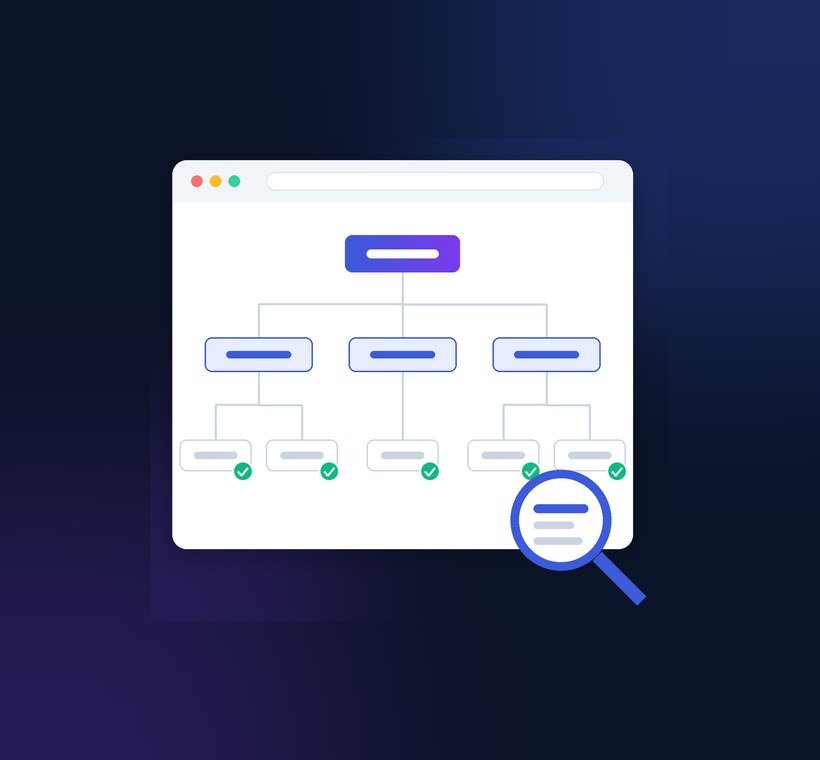
Before creating more content, make sure your site can actually be crawled and indexed.
Check:
- Important pages are indexable
- Internal links work
- There are no accidental noindex tags
- Canonical tags are correct
- XML sitemap exists
- Robots.txt is not blocking key pages
- Mobile experience is usable
- Pages load reliably
Google’s developer guidance also recommends secure, fast, accessible websites that work across devices. (Google for Developers)
If search engines cannot properly access your pages, everything else becomes harder.
2. Focus on search intent, not just keywords
A keyword tells you what someone searched.
Search intent tells you why.
For example:
| Search | What it tells you |
|---|---|
| “website design UK” | could indicate someone looking for an agency. |
| “how much does a website cost UK” | is more likely to be commercial research. |
| “what is web development” | is mainly informational. |
Your content should match that intent.
Commercial pages should target commercial searches
Examples:
- branding agency
- web development company
- PPC agency
- SEO services
- mobile app development
Informational articles should answer questions
Examples:
- how much does a website cost
- what makes a website effective
- Google Ads vs Meta Ads
- when do you need a rebrand
This is how your SEO content architecture should work:
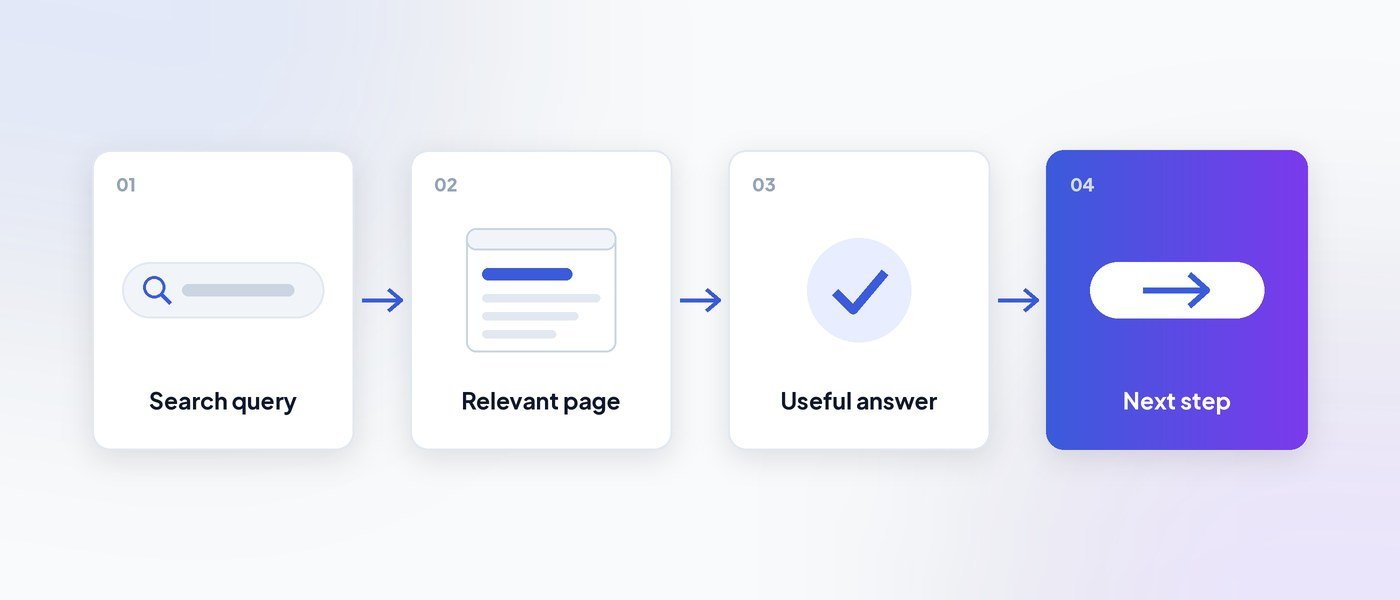
Search query → relevant page → useful answer → next step
3. Get the core service pages right
Many businesses focus on blogs too early.
But if the commercial pages are weak, traffic may not convert.
For your type of business, key service pages should clearly explain:
- What you offer
- Who it is for
- Problems you solve
- What the process looks like
- Proof of experience
- FAQs
- CTA
Google recommends using terms people actually search for in prominent locations such as page titles and main headings. (Google for Developers)
That means your service page should be written clearly enough that both users and search engines understand the topic immediately.
4. Build helpful content around real questions
Google’s Search Essentials emphasise helpful, reliable, people-first content rather than content created primarily to manipulate rankings. (Google for Developers)
Good SEO content should answer questions people genuinely have.
For example:
| Instead of writing | Write |
|---|---|
| “10 Reasons Digital Marketing Is Important” | “Google Ads vs Meta Ads: Which Is Right for Your Business?” |
The second addresses a real decision.
The strongest content usually helps someone:
5. Use internal links properly
Internal linking is one of the most underused SEO tools.
Google explicitly recommends linking important pages from other relevant pages on your site and using descriptive anchor text. (Google for Developers)
For example:
An article about website cost should link to:
- Website Design & Development
- Relevant case study
- Start a Project
An article about branding should link to:
- Branding service
- Branding case study
- Related branding insight
Your site should feel connected, not like a collection of isolated pages.
6. Prioritise local SEO if you serve a local market
If your business serves customers in a specific city or region, local SEO becomes especially important.
Current UK local-SEO guidance commonly focuses on:
For service businesses, local intent can be highly commercial. (Nurul Nahid)
For example:
- accountant Manchester
- web design Birmingham
- dentist Leeds
The goal is not to create hundreds of low-value location pages.
It is to create strong local relevance where your business genuinely operates.
7. Improve titles, headings and page structure
Google recommends using words people would actually use to search for your content in prominent locations, including titles and main headings. (Google for Developers)
That means:
| Weak | Better |
|---|---|
| Solutions for Tomorrow | Web Application Development for UK Businesses |
Your headings should be clear before they are clever.
A strong page structure usually includes:
- One clear H1
- Logical H2s
- Descriptive H3s
- Useful internal links
- Supporting visuals
- Clear CTA
Good structure improves both usability and search understanding.
8. Fix technical performance issues that affect users
Technical SEO should not become a never-ending checklist.
Focus on issues that actually affect crawling, indexing and user experience.
Priorities usually include:
- Slow pages
- Broken links
- Duplicate content
- Poor mobile usability
- Redirect chains
- Missing canonical tags
- Indexation problems
- JavaScript rendering issues
Technical SEO matters most when it removes barriers.
Google’s own developer documentation emphasises helping Google understand pages while also making them secure, fast and accessible. (Google for Developers)
9. Build authority gradually
Links still matter, but link building should support genuine authority.
Useful approaches include:
- Digital PR
- Industry partnerships
- Useful research
- Expert commentary
- Resource creation
- Supplier/customer relationships
- Relevant directories
Avoid chasing volume for the sake of volume.
A small number of relevant, credible links can be more valuable than many low-quality ones.
10. Measure performance in Google Search Console
SEO should be measured.
Google Search Console helps you understand:
- Queries generating impressions
- Pages receiving clicks
- Click-through rates
- Indexing issues
- Search visibility trends
Google specifically positions Search Console as the main tool for understanding how a site performs in Google Search. (Google for Developers)
Also track:
SEO success is not just:
“We rank number three.”
The more important question is:
“Is organic search contributing to the business?”
11. What should a UK business prioritise first?
If starting from scratch, I would prioritise in this order:
This sequence is much more practical than trying to optimise everything at once.
Common SEO mistakes
| Mistake | Why it matters |
|---|---|
| Publishing content with no clear intent | More content is not automatically better. |
| Targeting the same keyword across multiple pages | This can create internal competition and confusion. |
| Ignoring conversion | Traffic has little commercial value if users never take action. |
| Treating SEO as a one-off project | Markets, competitors and search behaviour change. |
| Focusing only on rankings | Rankings are useful, but enquiries and revenue matter more. |
Conclusion
SEO is not about trying every tactic at once.
It is about getting the fundamentals right in the correct order.
For most UK businesses, that means:
- Make the site accessible
- Build strong commercial pages
- Match search intent
- Create genuinely useful content
- Link related pages properly
- Strengthen local relevance where needed
- Build authority over time
- Measure what contributes to the business
Google’s own documentation is clear that there is no single trick that guarantees rankings. Sustainable SEO is built on useful content, technical accessibility and helping users find what they need. (Google for Developers)