
Why Your Business Needs a Content Strategy, Not Just More Social Posts
Learn how to build a social media content strategy around business goals, audience needs, content pillars, video, distribution and meaningful measurement.
Build Your StrategyMany businesses have a social media problem that looks like a content problem.
They say:
“We need to post more.”
So they start publishing more often.
A motivational quote on Monday.
A product post on Wednesday.
A team photo on Friday.
A Reel when someone has time.
After a few months, the business has produced dozens of posts but still cannot answer a more important question:
What is all this content supposed to achieve?
Posting more is not the same as having a content strategy.
A strategy connects what you publish to:
- Your business objectives
- Your audience
- Your brand
- Your customer journey
- Your marketing channels
- Your measurement
Current UK business guidance makes the same distinction: businesses should first understand their audience and the platforms that matter, then develop content aligned with business goals and measure the outcomes that genuinely reflect success. (Business Growth Service)
This guide explains how to move from random posting to a content system that actually supports your business.
1. Start With the Business Objective
Before deciding what to post, decide what the content needs to accomplish.
Possible objectives include:
A social media strategy becomes much clearer once you know what role content is expected to play.
Business.gov.uk similarly advises businesses to start digital marketing strategy with overall objectives and market understanding before selecting channels and tactics. (Business Growth Service)
2. Know Who the Content Is For
The more vague the audience, the more generic the content.
Instead of:
“Our target audience is businesses.”
Try:
“UK professional-service firms with 10–100 employees that rely heavily on referrals but want to generate more enquiries digitally.”
That gives you something useful to work with.
Ask:
- Who are they?
- What problems are they trying to solve?
- What questions do they repeatedly ask?
- What objections stop them buying?
- What language do they use?
- Which platforms do they spend time on?
- What type of content do they actually consume?
UK government social-media guidance recommends choosing platforms based on where your actual target customers are and tailoring content to audience behaviour rather than trying to maintain a presence everywhere. (Business Growth Service)
3. Stop Trying to Be Everywhere
A common mistake is assuming that every business needs:
- TikTok
- YouTube
- X
- Threads
It usually doesn’t.
A B2B consultancy may get far more commercial value from:
LinkedIn + YouTube + email
than from trying to maintain six social accounts.
An ecommerce lifestyle brand may prioritise:
Instagram + TikTok + Meta Ads
The right platform is determined by:
- Audience
- Product
- Buying journey
- Content format
- Business objective
Business.gov.uk explicitly recommends prioritising the channels used by your audience and warns that platform relevance matters more than simply maximising reach. (Business Growth Service)
4. Build Content Pillars
Content pillars are recurring themes that help organise what your business talks about.
They prevent every week from starting with:
“What should we post?”
Imagine a digital agency.
Its content pillars might be:
Then individual posts sit underneath those themes.
This creates consistency without making every post identical.
5. Align Content With the Customer Journey
Not everyone seeing your content is ready to buy.
A useful strategy usually contains content for different stages.
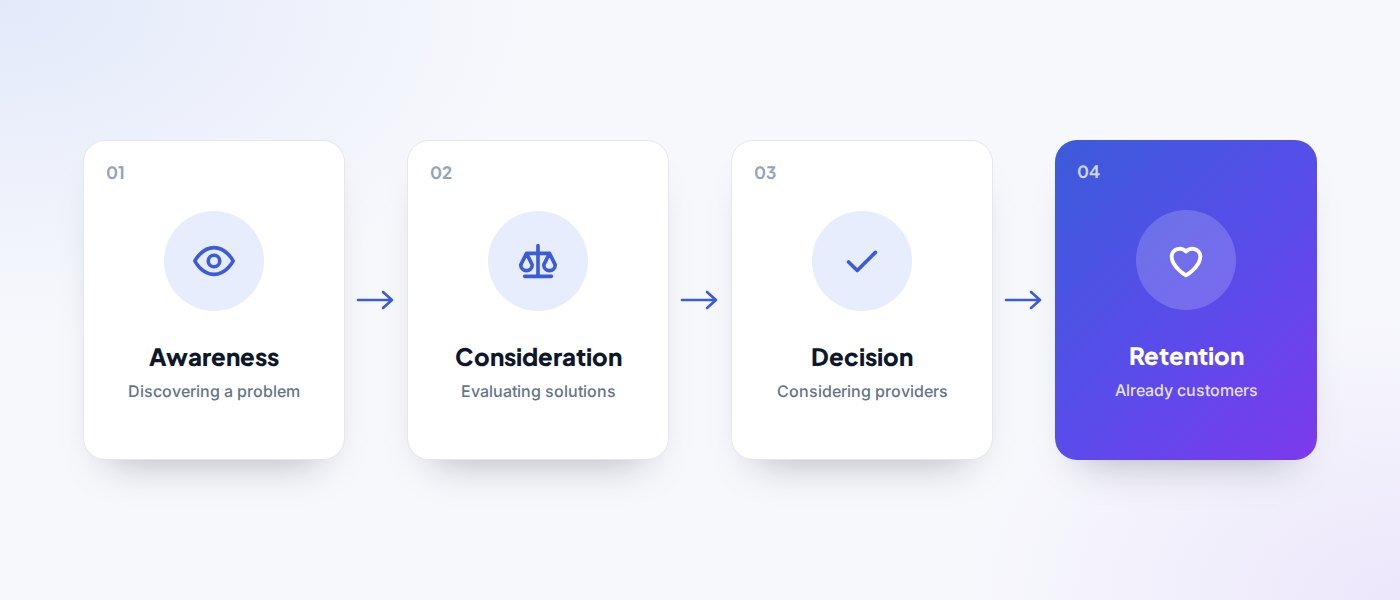
| Stage | Where the audience is | Example |
|---|---|---|
| Awareness | The audience is discovering a problem. | Why your website gets traffic but not enquiries. |
| Consideration | They are evaluating possible solutions. | Google Ads vs Meta Ads: Which is right for your business? |
| Decision | They are considering providers. | How we helped a professional-services firm increase qualified enquiries. |
| Retention | They are already customers. | Five ways to get more value from your existing website. |
This creates a much stronger system than publishing only promotional posts.
6. Create Content That Is Useful Before It Is Promotional
Most people do not open social media hoping to see another company advertisement.
Businesses therefore need to earn attention.
Useful content might:
Hootsuite’s current social-content guidance similarly frames effective content strategy around creating useful, engaging material rather than simply maintaining posting frequency. (Hootsuite Help Center)
A useful principle is:
Teach first. Promote second.
7. One Idea Can Become Many Pieces of Content
A good content strategy makes each strong idea work harder.
Imagine you publish an article:
How Much Does a Website Cost in the UK?
That single piece could become:
That means you do not need 30 completely new ideas every month.
You need a smaller number of good ideas distributed intelligently.
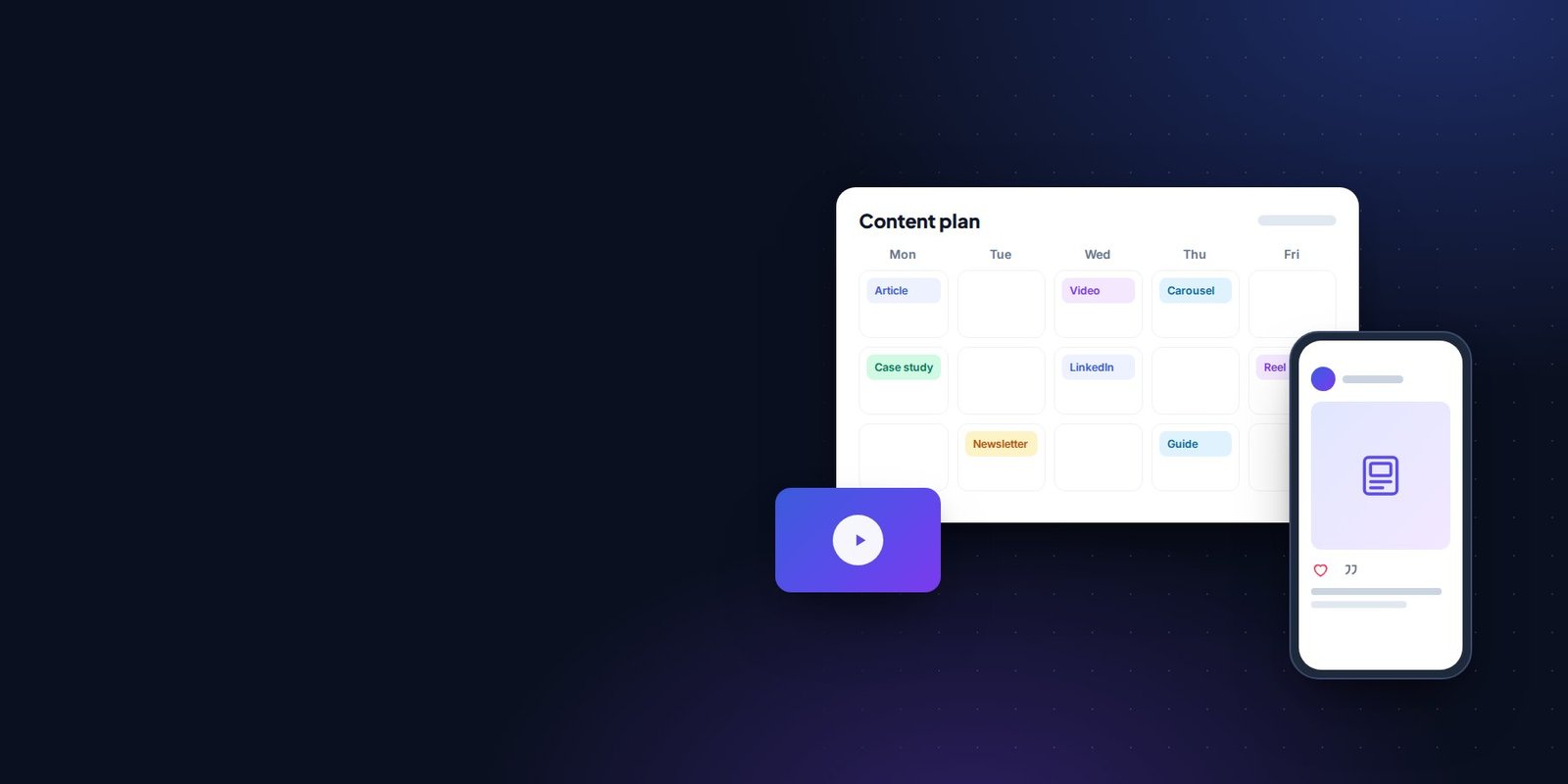
8. Build a Content Calendar Around Strategy
A content calendar should not simply say:
Monday — LinkedIn
Tuesday — Instagram
Wednesday — TikTok
It should connect content to themes and objectives.
For example:
| Week | Theme | Format | Purpose |
|---|---|---|---|
| 1 | Website cost | Article | Search/ |
| 1 | Cost factors | LinkedIn carousel | Awareness |
| 1 | Cost misconception | Short video | Reach |
| 2 | Website case study | Video | Proof |
| 2 | Client result | LinkedIn post | Consideration |
Hootsuite’s 2026 content-planning guidance describes planning as much broader than scheduling; it includes ideation, creation, approvals, repurposing and measurement. (Social Media Dashboard)
That is a much stronger model.
9. Use Formats for a Reason
Different formats do different jobs.
| Format | Useful for |
|---|---|
| Short-form video | Attention · Product demonstrations · Quick education · Personality · Social reach |
| Carousels | Step-by-step explanations · Frameworks · Checklists · Comparisons |
| Long-form articles | SEO · Authority · Detailed education · Commercial research |
| Case studies | Proof · Trust · Decision-making |
| Testimonials | Reducing risk · Credibility |
The goal is not to create every format.
It is to choose the formats that support the message.
10. Video Should Be Part of the System, Not a Separate Activity
Businesses often treat video as:
“Let’s make a promotional video.”
That can work.
But video is more powerful when integrated into the wider content strategy.
For example:
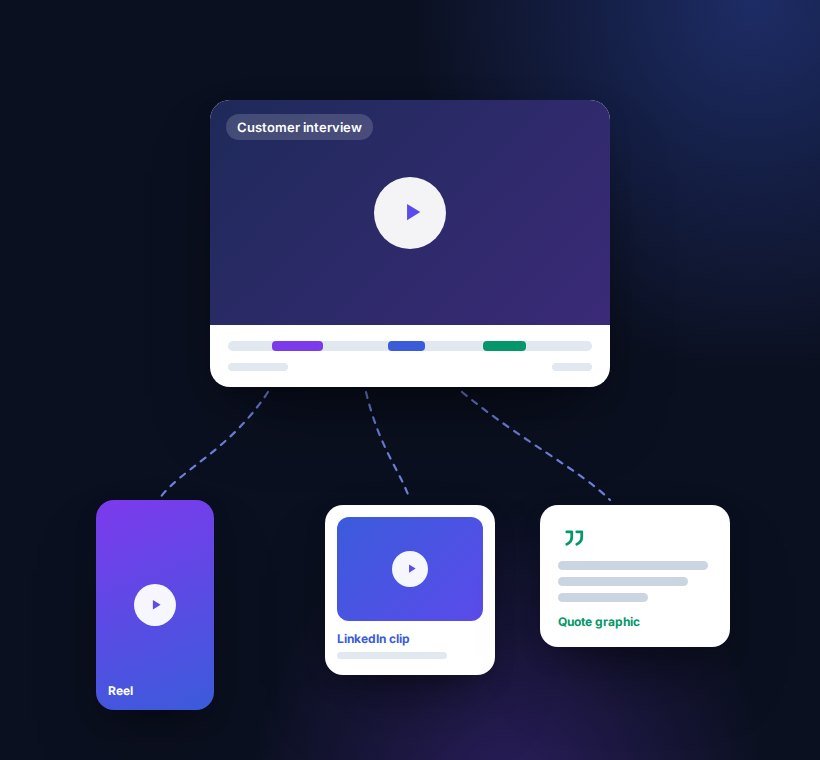
A customer interview can become:
- Full testimonial video
- Short Reel
- LinkedIn clip
- Quote graphic
- Case-study content
- Paid advertising creative
An event can create:
- Event film
- Speaker clips
- Social posts
- Behind-the-scenes content
- Photography
- Future promotional material
This is why Video & Content should connect naturally with your broader marketing strategy rather than operate as an isolated service.
11. Organic and Paid Content Should Support Each Other
Organic social media helps businesses:
- Build familiarity
- Establish credibility
- Test ideas
- Maintain relationships
Paid media helps businesses:
- Reach specific audiences
- Scale successful messages
- Generate leads
- Promote offers
Business.gov.uk differentiates organic growth from paid advertising and recommends choosing the approach based on whether the goal is awareness, sales or both. (Business Growth Service)
A strong content strategy can support both.
For example:
An organic video performs unusually well.
That may be a useful signal that the theme or creative could also work in paid advertising.
12. Don’t Measure Success Using Likes Alone
Likes can be useful.
But they are not a business strategy.
Measure according to the objective.
| If the goal is… | Measure |
|---|---|
| Awareness | Reach · Impressions · Video views · Brand searches |
| Engagement | Comments · Shares · Saves · Watch time |
| Traffic | Click-through rate · Website sessions |
| Leads | Enquiries · Form submissions · Cost per lead |
| Sales | Revenue · Conversion rate · ROAS |
Business.gov.uk’s current guidance specifically recommends focusing on metrics that reflect the business objective rather than superficial platform activity. (Business Growth Service)
13. Social Media Should Lead Somewhere
Your content needs a next step.
That could be:
Business.gov.uk recommends clear calls to action when the goal is commercial activity, especially where content is intended to support sales. (Business Growth Service)
The CTA does not need to be aggressive.
But the customer journey should not simply end with:
like the post.
14. Brand Consistency Matters
Content is one of the places customers experience your brand most frequently.
That means every post contributes to brand perception.
Consistency should exist across:
This does not mean making every post look exactly the same.
It means making the business recognisable.
Business.gov.uk defines a brand as the way a business connects with customers and recommends understanding purpose, audience and competition before deciding how the brand should present itself. (Business Growth Service)
Your content should reinforce that same position.
15. Consistency Is More Important Than Frequency
A business posting seven times one week and disappearing for six weeks has no real content system.
A better approach might be:
- One strong article monthly
- Two useful LinkedIn posts weekly
- One video weekly
- Supporting social content
- One monthly email
The exact frequency is less important than whether the process is sustainable.
Content planning should reduce last-minute pressure rather than create it. Hootsuite’s 2026 planning guidance notes that structured planning can improve consistency, efficiency and team workflow. (Social Media Dashboard)
16. Create a Repeatable Production Workflow
A good content strategy also defines how content gets made.
For example:
Without a workflow, even a strong strategy can collapse under day-to-day demands.
17. Social Listening Should Influence the Plan
You do not need to guess what customers care about.
Listen to:
These are content ideas hiding in plain sight.
If customers repeatedly ask:
How long does a website project take?
that is a content opportunity.
If they ask:
Why are Google Ads so expensive?
another opportunity.
A good content strategy listens before it publishes.
18. Search and Social Can Support Each Other
Search and social are often treated as separate channels.
They should not be.
A useful SEO article can become social content.
A strong social discussion can reveal future search topics.
A video can support:
- YouTube
- Website content
- Social
- Ads
- Search visibility
That creates a more connected content ecosystem.
19. Build Content Around Real Expertise
One of the easiest ways to create generic content is to write about subjects nobody in the business actually understands deeply.
Instead, use internal expertise.
Interview:
For example:
Instead of:
“Five Website Trends”
ask your developer:
“What are the three website problems you see repeatedly when taking over existing projects?”
That produces much more credible content.
20. AI Can Help — But It Should Not Become the Strategy
AI can support:
- Research
- Ideation
- Editing
- Repurposing
- Content organisation
But publishing large volumes of generic material does not automatically create authority.
Current social-media guidance increasingly discusses AI as a production and co-creation tool, while still emphasising authenticity, audience relevance and useful engagement. (Business Growth Service)
The strategy still needs human judgement:
- What do we believe?
- What do our customers need?
- What is worth saying?
- What evidence do we have?
AI can accelerate production.
It cannot replace a point of view.
21. Common Social Content Mistakes
| Mistake | What to remember |
|---|---|
| Posting without an objective | Activity is not strategy. |
| Being on every platform | Focus where your audience actually exists. |
| Talking only about yourself | Customers care about their own problems first. |
| Chasing trends constantly | Trends should support the brand, not replace it. |
| Using no CTA | Give interested users somewhere to go. |
| Measuring only engagement | Connect content to commercial outcomes. |
| Creating everything from scratch | Repurpose strong ideas. |
| Inconsistent branding | Repeated exposure should increase recognition. |
22. A Simple Content Strategy Framework
If you’re starting from scratch, use:
That is a content strategy.
“Post more on Instagram” is not.
23. Example: Professional Services Business
Imagine an accountancy firm wants more business-owner enquiries.
Instead of publishing:
Tax deadline reminder
every few weeks, the strategy could include:
Now the content has structure.
24. Example: Ecommerce Brand
An ecommerce content system might include:
This supports both organic social and paid media.
25. How Often Should a Business Post?
There is no universal number.
Posting more frequently only helps if:
- Quality remains strong
- The audience finds the content relevant
- The team can sustain production
- The content supports an objective
A useful content system may outperform a high-volume posting schedule.
Quality + relevance + consistency generally matter more than simply filling the calendar.
26. How to Know Whether the Strategy Is Working
Review content monthly or quarterly.
Ask:
- Which topics generate the most attention?
- Which formats get the strongest engagement?
- Which posts drive website traffic?
- Which content contributes to leads?
- Which videos retain viewers?
- Which topics perform across multiple channels?
- What should we create more of?
Then adjust.
A content strategy is not a static document.
It is a system that improves through feedback.
Content Strategy Checklist
Before publishing, ask:
- What objective does this support?
- Who is it for?
- What problem does it address?
- Which content pillar does it belong to?
- Why is this format appropriate?
- Where should it be distributed?
- What should someone do next?
- How will we measure it?
- Can the idea be repurposed?
- Does it sound and look like our brand?
If you cannot answer those questions, you may simply be posting for the sake of posting.
Conclusion
Businesses do not usually need more social posts.
They need more purposeful content.
The strongest content strategies connect:
Business objective → Audience → Brand → Content → Distribution → Customer journey → Measurement
That turns social media from an endless publishing task into part of a wider growth system.
Because content should not simply keep your feed active.
It should make your business easier to notice, understand, trust and eventually choose.