

How to build a brand that stands out in a crowded market
Learn how to build a distinctive brand through positioning, audience insight, identity, messaging and consistency, with practical advice for UK businesses.
Build Your BrandIntroduction
Most businesses don’t struggle because nobody has heard of their category.
They struggle because customers see several businesses that look, sound and promise almost the same thing.
That creates a difficult question:
Why should someone choose you?
A strong brand helps answer that question before the sales conversation begins.
But standing out doesn’t mean being louder, using brighter colours or creating a more unusual logo. It starts with understanding what your business represents, who it is for and why it deserves a distinct place in the market.
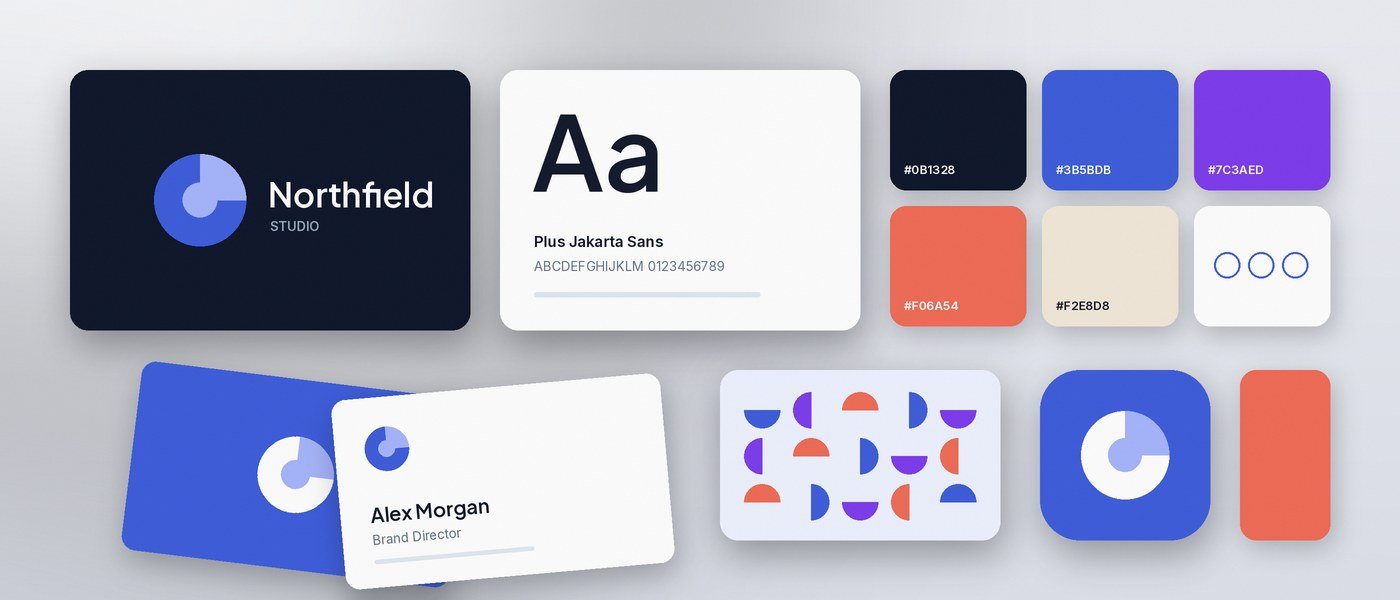
UK government guidance makes the same distinction: a brand is broader than a logo. It connects the business to its customers through purpose, values, identity, personality and consistent communication (source: Business.gov.uk).
This guide looks at the strategic foundations behind brands that are easier to recognise, remember and choose.
1. Start with the business, not the logo
One of the easiest branding mistakes is beginning with visual design.
Businesses often start by asking:
- What should our logo look like?
- What colours should we use?
- Which font feels modern?
- Should the website look premium?
Those questions matter eventually.
But they come later.
Before designing anything, get clear on:
- Why the business exists
- What problem it solves
- What it believes
- What it does particularly well
- Where it wants to go
- Who it wants to serve
Business.gov.uk specifically recommends defining the purpose, values and customer problem before developing the identity.
Ask yourself:
If the logo disappeared tomorrow, what would still make this business recognisable?
The answer is where brand strategy begins.
2. Understand who you’re trying to matter to
A brand doesn’t need to appeal to everyone.
In fact, trying to appeal to everyone often makes a brand less memorable.
Strong brands are built around a clear understanding of the people they want to attract.
That means going beyond basic demographics.
Think about:
Business.gov.uk similarly recommends understanding where customers are, how they behave and what language or visual cues resonate with them.
A brand becomes stronger when it feels specifically relevant to the right audience.
3. Study the market before trying to look different
Differentiation does not happen in isolation.
You need to understand what customers are already seeing.
Review your competitors and look for patterns.
Examine:
You’re not researching competitors to copy them.
You’re looking for category conventions and gaps.
If every competitor says:
Trusted experts delivering exceptional service
then saying the same thing slightly differently will not create meaningful differentiation.
UK business guidance recommends researching how competitors price, promote and deliver their services specifically to identify what makes your own business different and where it could fit in the market (source: Business.gov.uk).
4. Define your position in the market
Brand positioning is the strategic decision about where you want your business to sit in a customer’s mind relative to alternatives.
It answers questions such as:
- Who are we for?
- What category are we in?
- What do we want to be known for?
- What makes us different?
- Why should customers believe us?
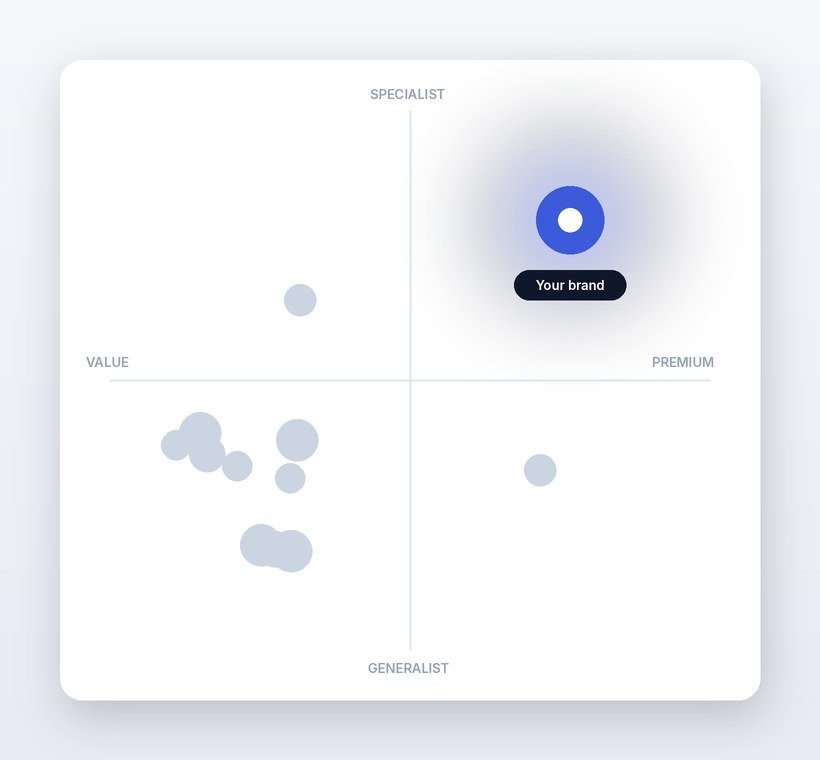
A current UK brand-positioning guide usefully separates positioning from identity: positioning decides your place in the market, while identity expresses that position visually and verbally (source: Aether Agency).
Common positioning approaches include:
The important point is not which route sounds best.
It’s whether the position is:
- Relevant
- Believable
- Distinctive
- Valuable
- Sustainable
5. Make your difference specific
Many businesses claim differentiation without actually being different.
Common examples include:
- We care about our customers.
- We provide quality service.
- We offer tailored solutions.
- We are passionate about what we do.
None of these are inherently bad.
The problem is that almost every competitor can say them.
A meaningful difference should be specific enough that someone can understand why it matters.
For example:
| Instead of | Try |
|---|---|
| Personal service. | Every client works directly with a senior strategist rather than being handed to a junior account team. |
| Fast delivery. | Standard projects launch within six weeks using a clearly defined approval process. |
Specificity makes positioning easier to understand and harder to imitate.
6. Turn strategy into messaging
Once your positioning is clear, it needs to become language.
This is where brand messaging comes in.
Your messaging should define:
- Core proposition
The clearest expression of what you offer and why it matters. - Supporting messages
The key reasons someone should believe or choose you. - Tone of voice
How the brand sounds. - Proof
Evidence that supports your claims. - Calls to action
What you want people to do next.
A strong message does not need to sound clever.
It needs to be understood.
Compare:
Innovative solutions for tomorrow’s challenges.
with:
We build custom software that replaces slow manual business processes.
The second may be less poetic, but it communicates something useful.
7. Build an identity that expresses the strategy
Only once the strategic foundation is clear should visual identity become the focus.
Your identity may include:
The aim is not simply to make the brand attractive.
The identity should reinforce the qualities you want customers to associate with the business.
For example:
- A financial advisory brand may prioritise clarity, confidence and restraint.
- A youth-oriented consumer brand may benefit from energy, flexibility and cultural relevance.
- A technology company may need to balance innovation with trust.
The Office for National Statistics’ own brand system demonstrates how identity extends beyond a logo into typography, colours, iconography, illustration, photography, video and consistent application (source: ONS Service Manual).
8. Create consistency without becoming repetitive
Consistency helps people recognise a brand.
That does not mean every social post, web page and presentation should look identical.
It means the underlying system remains recognisable.
Brand guidelines can help establish:
- Logo usage
- Colour rules
- Typography
- Tone of voice
- Photography
- Layout principles
- Social templates
- Content style
Business.gov.uk recommends formalising both visual identity and brand personality in guidelines so they can be applied consistently after the initial branding work is complete.
Good guidelines create consistency.
Great guidelines also leave enough flexibility for the brand to work across new formats and channels.
9. Apply the brand across the whole customer experience
A brand is weakened when the strategy exists only in a brand-guidelines PDF.
It needs to appear in the places customers actually experience the business.
That includes:
- Website
- Search results
- Social media
- Advertising
- Sales documents
- Packaging
- Video
- Customer support
- Proposals
- Physical spaces
This is where Brand → Build → Grow → Create becomes important.
- Your brand strategy influences your website.
- Your website influences conversion.
- Your content influences recognition.
- Your marketing reinforces the position.
When those elements contradict one another, the brand feels fragmented.
When they reinforce each other, recognition becomes much stronger.
10. Give customers a reason to believe you
A positioning statement is only valuable if the business can support it.
| If you claim | Then |
|---|---|
| The fastest service in the market | You need evidence. |
| Specialist experts | Show the expertise. |
| Trusted by ambitious businesses | Show the work and testimonials. |
Useful proof can include:
- Case studies
- Client results
- Reviews
- Testimonials
- Certifications
- Awards
- Years of experience
- Proprietary methods
- Product demonstrations
The strongest brands connect promise with proof.
11. Protect the brand you build
Branding is also a business asset.
A company name registration or domain name does not automatically give you trade-mark rights. The UK Intellectual Property Office notes that a trade mark can protect identifiers such as names, logos and other distinctive brand elements, while registration provides stronger legal rights against unauthorised use (source: GOV.UK).
Before investing heavily in a new identity, consider:
- Checking existing trade marks
- Securing relevant domains
- Securing social handles
- Reviewing the appropriate trade-mark classes
- Considering future markets
UK trade-mark protection applies within the UK, so businesses expanding internationally should consider protection in relevant territories as well (source: Business.gov.uk).
This is an area where professional legal or trade-mark advice may be appropriate.
12. Know when it is time to rebrand
Not every business needs a rebrand.
Sometimes the existing brand is perfectly capable of supporting growth.
But a rethink may be justified when:
- The business has changed significantly
- The audience has changed
- Your offer has expanded
- Your positioning is unclear
- The identity feels inconsistent
- You are entering new markets
- The business looks interchangeable with competitors
- The current brand no longer reflects the quality of the company
A rebrand should solve a strategic problem.
It should not simply be a cosmetic refresh because the team is bored with the logo.
13. Common branding mistakes
14. How do you know whether a brand is working?
Brand performance is harder to measure than a paid advertising campaign, but it is not impossible.
Useful indicators can include:
| Indicator | What to ask |
|---|---|
| Direct traffic | Are more people visiting you directly? |
| Branded search | Are more people searching specifically for your company or product? |
| Conversion rate | Does clearer positioning improve response? |
| Customer recall | Can people remember and describe the brand? |
| Pricing power | Does the brand support stronger perceived value? |
| Sales feedback | Do prospects understand what makes the business different? |
| Engagement | Does your audience interact with and recognise your content? |
The goal is not to measure a logo.
It is to understand whether the brand is making the business easier to recognise, trust and choose.
Conclusion
Standing out does not come from trying to look different for the sake of it.
It comes from clarity.
A strong brand understands:
- Why the business exists
- Who it serves
- What position it wants to own
- Why customers should care
- How that position should look and sound
- How it should be experienced consistently
The visual identity matters.
But it is the expression of the strategy, not the strategy itself.
When positioning, messaging, identity and customer experience work together, a brand becomes easier to notice, remember and choose.
And in a crowded market, that is where real differentiation begins.